Retaining Wall Installation | Block, Timber, Boulder & Natural Stone
Northland Landscape & Construction Inc provides Retaining Wall Installation services that help solve some of the most common grade and erosion problems found on residential and commercial properties. When land slopes too sharply, the area often becomes difficult to maintain, hard to use, and more vulnerable to washout over time. A retaining wall creates structure where the property currently feels unstable or underused. By holding back soil and supporting changes in elevation, it allows the space to function better while also creating a cleaner and more finished appearance.
Many properties have sections that lose soil during heavy rain, collect water at the bottom of a hill, or remain difficult to use because of uneven terrain. In those situations, Retaining Wall Installation can do more than improve appearance. It can help preserve the landscape, support drainage management, and turn an awkward slope into a practical part of the property. Whether the goal is to control erosion, build out a patio area, create a garden space, or improve access across the yard, a retaining wall often provides the structure needed to make that possible.
Retaining walls also offer strong visual value. A properly planned wall creates clean lines, better definition, and a more intentional landscape layout. It can tie together other hardscape features such as pavers, steps, plantings, and outdoor living areas. With the right material and installation method, a retaining wall becomes both a structural feature and a design element that improves how the whole property looks and works over time.
Is a Retaining Wall Right for Your Property?
Does your property sit on a slope that continues to erode over time? Or do you have an area you would like to use but cannot because the ground sits at an incline? In many cases, Retaining Wall Installation provides a practical solution that stabilizes the land and creates usable space.
Not every slope needs a wall, but many do. If rainwater keeps washing mulch, rock, or soil downhill, the grade may need structural support rather than another temporary fix. The same is true when a hillside makes mowing difficult, creates drainage issues, or limits how the yard can be used. A retaining wall gives the property a stronger transition between elevations and helps turn problem areas into spaces that feel planned and usable.
Signs a slope may need support
Some warning signs are easy to spot. Exposed roots, bare soil, washout channels, leaning edges, and repeated mulch loss often point to a grade problem that will keep coming back. In other cases, the issue shows up as standing water near the base of a slope or as a section of yard that always feels too uneven to use well. When those problems continue season after season, Retaining Wall Installation may be the right long-term solution.
When a wall improves usability
A wall can also make sense even before major erosion starts. If the goal is to create a level area for a patio, a seating space, planting beds, or an outdoor kitchen, a retaining wall often provides the support needed to reshape the land properly. Instead of treating the slope as wasted space, the wall makes that area part of the overall property design.
Structural Support and Drainage Control
Retaining walls offer both structural and functional benefits. Over time, steep slopes and hillsides naturally erode due to rain, wind, and water runoff from irrigation systems. A properly installed retaining wall helps manage this runoff by redirecting water and supporting the soil. As a result, retaining walls reduce erosion, limit pooling water, and help protect nearby landscaping and foundations.
That structural role matters because soil movement rarely stays isolated. Once erosion starts, it can affect mulch beds, lawns, hardscape edges, and even nearby structures if drainage remains unchecked. A retaining wall helps stop that chain reaction by holding back the grade and giving runoff a more controlled path. This improves stability across the site and helps protect the work around it.
Why drainage matters behind the wall
Drainage is one of the most important parts of Retaining Wall Installation. Water pressure builds quickly when runoff has nowhere to go, and that pressure can shorten the life of the wall if it is not managed correctly. Proper installation takes drainage into account from the start. That includes preparing the base, using the right backfill, and creating a system that helps water move through or away from the wall area instead of forcing against it.
How walls help protect nearby features
A retaining wall can also help protect patios, walkways, planting beds, and foundations that sit near changing grades. When soil shifts, the effects can spread beyond the slope itself. A stable wall helps hold the grade in place so surrounding features are less likely to deal with washout, undermining, or repeated cleanup after storms.
Creating Usable Outdoor Space
Beyond stabilizing soil, retaining walls help turn sloped areas into functional outdoor space. By leveling uneven ground, a retaining wall opens up new possibilities for how the property can be used. Homeowners often use these newly created areas for patios, seating spaces, outdoor kitchens, or garden beds.
Retaining walls also enhance the overall appearance of a property. Clean lines and structured landscaping improve curb appeal, which can add long-term value. When designed thoughtfully, a retaining wall blends function and appearance into one lasting feature.
Making room for patios and seating areas
One of the most common benefits of a retaining wall is the ability to create level space where none existed before. A slope that once felt unusable can become the base for a patio, fire pit area, or seating zone. That not only makes the yard more functional, it also makes it easier to connect outdoor living spaces with nearby walkways, driveways, or entrances.
Improving layout and flow
Walls can also improve how people move through the property. A well-placed retaining wall can define edges, support steps, separate elevations, and give the landscape a more organized layout. Instead of having one long sloped area that feels difficult to navigate, the property gains stronger transitions and a more finished overall flow.
Choosing the Right Retaining Wall Material
One of the most important decisions in Retaining Wall Installation is selecting the right material. Different materials offer different looks, strengths, and maintenance needs. Modular block and concrete walls provide a clean, modern appearance and strong structural support.
For a more natural look, boulder retaining walls and natural stone create an organic feel that blends into the surrounding landscape. Treated timber offers a simpler, classic option that works well in many residential settings. Choosing the right material depends on the location, soil conditions, and the style you want to achieve.
If you are planning a new retaining wall or replacing an existing one, selecting the proper material and installation approach is key. A well-built retaining wall provides long-term stability and peace of mind, allowing you to enjoy your outdoor space without worrying about future soil movement.
Block retaining walls
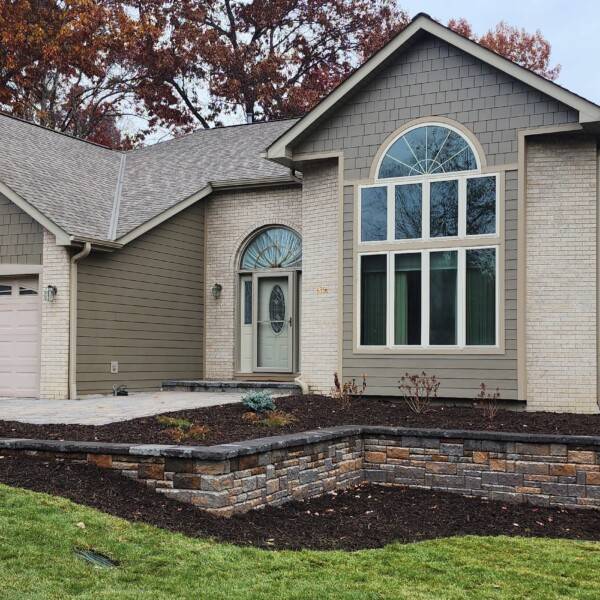
Block walls are a popular choice because they combine a clean appearance with strong performance. They work well in many residential and commercial applications and can fit both simple and more detailed designs. Block systems also pair well with steps, paver patios, and other hardscape features, which helps the finished project feel cohesive.
Timber retaining walls
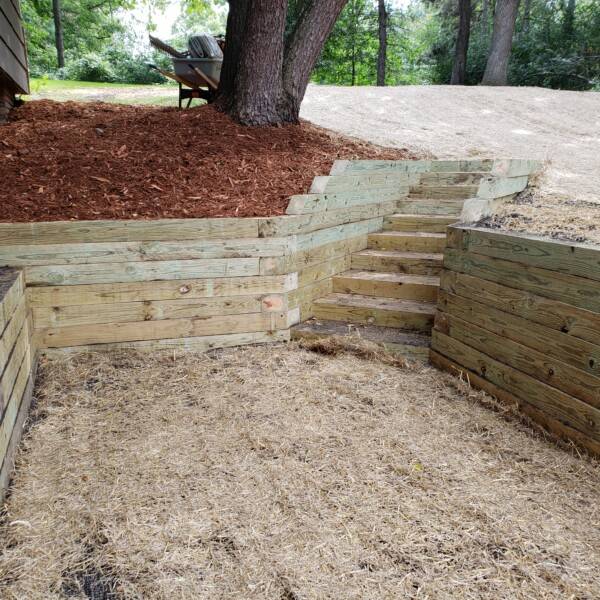
Treated timber offers a more traditional and straightforward look. In the right setting, timber can work well for smaller residential projects and landscapes where a softer visual style fits the property. However, material choice should always match the demands of the site, especially where grade pressure, moisture, and long-term durability are major concerns.
Boulder and natural stone retaining walls
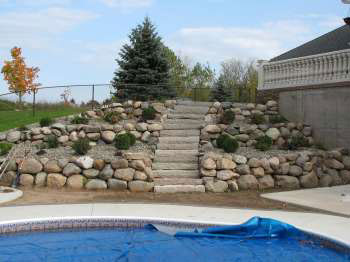
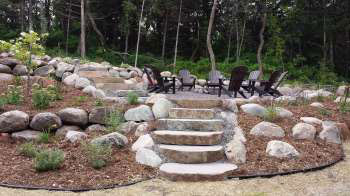
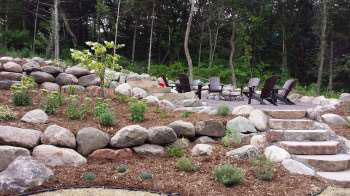
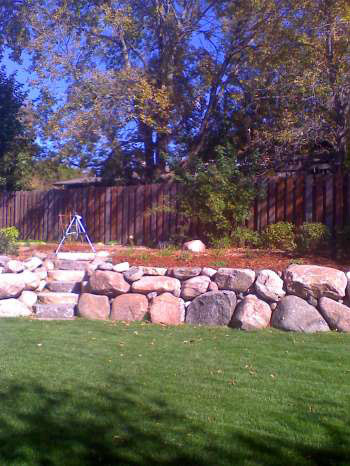
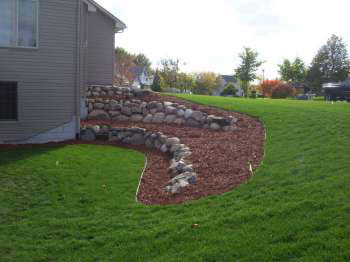
Boulder and natural stone walls create a more organic appearance and often blend naturally into wooded lots, rural settings, and landscapes with a less formal style. These materials can add visual weight and texture while still providing the support the slope needs. They are often chosen when the goal is to make the wall feel like part of the natural site rather than a sharp architectural feature.
Why Proper Retaining Wall Installation Matters
Even strong materials depend on proper installation. A retaining wall has to do more than look good from the front. It needs the right base, the right backfill, and the right drainage approach to perform over time. If those steps are rushed or handled poorly, the wall may shift, lean, or fail long before it should.
Base preparation and grade work
The ground below the wall determines how well the structure will hold up. Crews need to prepare the base carefully so the wall starts on stable footing. Accurate grading also matters because it helps control runoff and supports the wall’s long-term performance. A good installation begins below the visible surface.
Long-term performance and appearance
A properly built wall does more than resist movement. It also helps the finished landscape look cleaner and more intentional for years to come. Straight lines, consistent elevations, and stable surrounding grades all contribute to a better final result. When Retaining Wall Installation is done correctly, the wall protects the property and improves the look of the site at the same time.
Retaining Wall Installation for Long-Term Value
Retaining Wall Installation adds long-term value because it solves practical problems while improving the overall appearance of the property. It can protect soil, improve drainage, create usable outdoor space, and support a more finished landscape design. For many properties, that combination makes a retaining wall one of the most valuable site improvements available.
Whether the project calls for block, timber, boulder, or natural stone, the goal stays the same: create a stable, attractive structure that supports the land and improves how the property functions. A well-planned retaining wall helps turn difficult grades into useful space and gives the landscape a stronger, more finished look for years to come.
If you are planning a new wall or replacing an existing one, Northland Landscape & Construction Inc can help with Retaining Wall Installation that improves stability, usability, and appearance. From material selection to grading, drainage, and final construction, the right approach makes a major difference in long-term performance. Contact Northland Landscape & Construction Inc today to get started on your retaining wall project.
RETAINING WALLS IMAGE GALLERY